
Table of Contents
A well-designed rotational grazing system is one of the most effective ways to improve livestock productivity, maintain soil health, and maximize pasture utilization. Among different grazing strategies, a 4 rotational grazing plan is widely used by both small-scale and commercial farmers because it provides a balance between pasture recovery time and consistent feed availability.
However, the success of any rotational grazing system depends heavily on one critical factor: the type of pasture grass used. Choosing the wrong grass species can lead to overgrazing, poor regrowth, soil degradation, and reduced livestock performance. On the other hand, selecting the right combination of pasture grasses can significantly increase carrying capacity, improve animal nutrition, and ensure year-round pasture availability.
A 4 paddock rotational system divides land into four sections, allowing livestock to move between paddocks while one section rests and regenerates. This creates a continuous cycle of grazing and recovery. But not all grasses respond equally well to this system. Some recover quickly after grazing, others tolerate heavy grazing pressure, and some provide high nutritional value but require careful management.
This article explores the best pasture grass options for a 4 rotational grazing plan, how each grass performs under grazing pressure, and how to combine them for maximum productivity and sustainability.
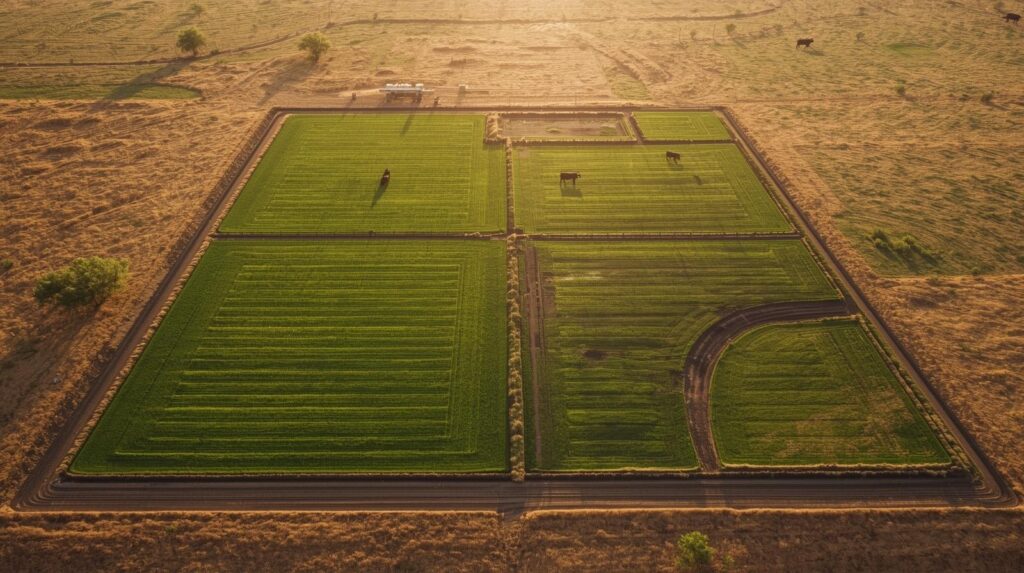
Understanding a 4 Rotational Grazing System
A 4 rotational grazing system is based on dividing pasture land into four separate grazing areas, or paddocks. Livestock are moved systematically from one paddock to another, allowing each section to rest and regrow before being grazed again.
The key principle behind this system is recovery time. Grass is not continuously grazed, which prevents it from being weakened or destroyed. Instead, each paddock undergoes a cycle of grazing, rest, and regrowth.
Typically, livestock will graze one paddock for a short period, often between 3 to 10 days depending on stocking density and grass growth rate. After grazing, that paddock is rested for several weeks while the animals move through the remaining paddocks.
This system improves pasture utilization efficiency and encourages stronger root development in grasses. It also helps control weeds, improves soil fertility through manure distribution, and reduces parasite buildup in livestock grazing areas.
However, the success of this system depends on matching the right grass species with the grazing intensity and recovery periods.
Key Characteristics of Ideal Rotational Grazing Grass
Not all grasses are suitable for rotational grazing. The best pasture grasses for a 4 paddock system must have specific characteristics that allow them to survive repeated grazing cycles while maintaining productivity.
The first important characteristic is rapid regrowth ability. After livestock graze a paddock, the grass must recover quickly during the rest period. Slow-growing grasses cannot keep up with the rotation cycle and will eventually weaken.
The second requirement is high grazing tolerance. Some grasses are easily damaged when repeatedly grazed close to the ground. Ideal pasture grasses should withstand defoliation without losing vigor.
Third, the grass must have good root structure. Strong roots allow the plant to recover faster and access deep soil moisture during dry periods.
Fourth, nutritional value is critical. Since the purpose of grazing is to feed livestock, the grass must provide sufficient protein, energy, and digestible fiber.
Finally, the grass should be adaptable to local climate conditions, including rainfall patterns, temperature fluctuations, and soil type.
With these factors in mind, we can now explore the best pasture grass options for a 4 rotational grazing system.
Kikuyu Grass (Pennisetum clandestinum)
Kikuyu grass is one of the most widely used pasture grasses in rotational grazing systems, particularly in warm climates. It is known for its aggressive growth and strong recovery ability after grazing.
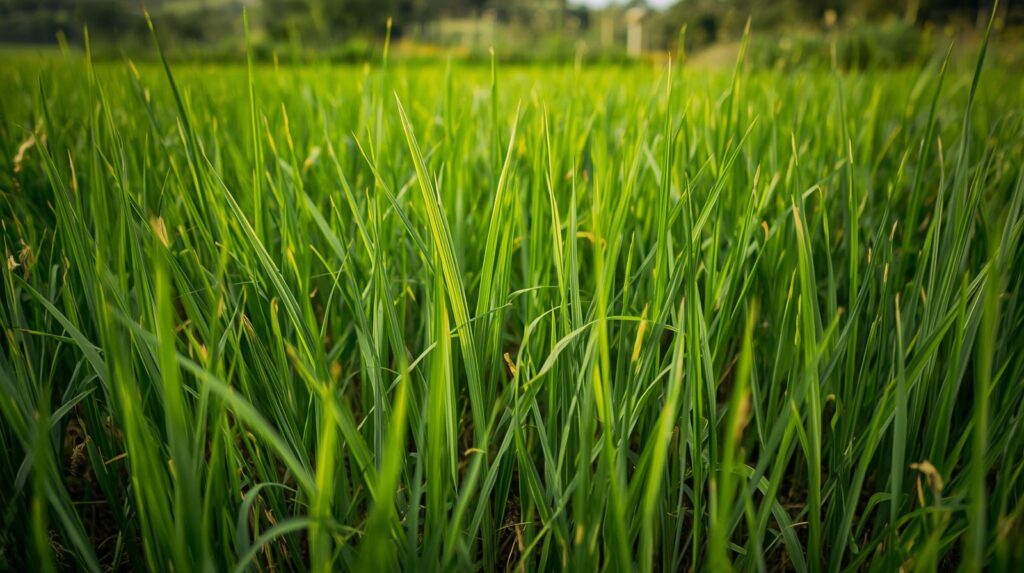
One of the biggest advantages of Kikuyu grass is its rapid regrowth. After grazing, it quickly produces new shoots, making it ideal for systems where paddocks are frequently rotated. This allows farmers to maintain a consistent grazing cycle without long delays.
Kikuyu also has a dense growth habit, which helps it withstand heavy grazing pressure. Livestock such as cattle and goats can graze it repeatedly without completely destroying the pasture.
In terms of nutrition, Kikuyu provides moderate to high protein levels when properly managed. It is most nutritious when kept young and actively growing.
However, Kikuyu requires good soil fertility and adequate moisture to perform optimally. In very dry conditions, its productivity may decline unless irrigation or rainfall is sufficient.
Overall, Kikuyu grass is one of the strongest candidates for a 4 rotational grazing system due to its resilience and fast recovery.
Bermuda Grass (Cynodon dactylon)
Bermuda grass is another excellent option for rotational grazing systems. It is widely used in tropical and subtropical regions because of its drought tolerance and ability to withstand heavy grazing.
One of the key strengths of Bermuda grass is its deep root system. This allows it to survive dry conditions better than many other pasture grasses. Even after repeated grazing, it can recover quickly when moisture is available.
Bermuda grass spreads through runners, which helps it fill in bare patches and maintain a dense pasture cover. This makes it highly suitable for intensive grazing systems.
From a nutritional perspective, Bermuda grass offers good energy content, especially when kept in a vegetative stage. However, like most grasses, its quality declines if it becomes over-mature.
Its main limitation is that it can become invasive if not properly managed. It also requires regular fertilization to maintain high productivity.
In a 4 paddock rotation system, Bermuda grass performs well because it responds quickly to rest periods and grazing cycles.
Rhodes Grass (Chloris gayana)
Rhodes grass is one of the most popular pasture grasses in African livestock systems due to its adaptability and reliability. It performs particularly well in semi-arid environments.
One of the main advantages of Rhodes grass is its drought tolerance. It can survive with limited water and still produce reasonable biomass, making it ideal for regions with inconsistent rainfall.
Rhodes grass also establishes quickly and provides good ground cover, reducing soil erosion in grazing areas.
In a rotational grazing system, Rhodes grass benefits significantly from rest periods. It recovers well after grazing and can maintain productivity over multiple cycles.
However, compared to Kikuyu and Bermuda grass, Rhodes grass has slightly lower regrowth speed and may require longer rest periods depending on grazing intensity.
Despite this, it remains a strong candidate for low-input farming systems and dryland grazing setups.
Buffel Grass (Cenchrus ciliaris)
Buffel grass is highly valued in arid and semi-arid regions due to its exceptional drought resistance. It is one of the toughest pasture grasses available for harsh environments.
This grass is particularly suitable for areas with low rainfall, where other pasture species may struggle to survive. It has deep roots that allow it to access moisture far below the soil surface.
Buffel grass performs reasonably well under grazing, although it is not as fast-recovering as Kikuyu or Bermuda grass. Therefore, careful management of grazing periods is important.
One limitation of Buffel grass is that it can become less palatable when mature. Livestock prefer younger growth, so timing of grazing is critical in a rotational system.
In a 4 paddock system, Buffel grass works best when combined with faster-growing species to balance productivity and grazing pressure.
Lucerne (Alfalfa) in Mixed Systems
Lucerne, also known as alfalfa, is not a grass but a leguminous forage plant that plays an important role in high-quality grazing systems.
It is extremely rich in protein and minerals, making it an excellent supplement in livestock diets. However, it is more sensitive to grazing pressure compared to typical pasture grasses.
Lucerne performs best in rotational grazing systems where it is allowed sufficient recovery time between grazing cycles. Overgrazing can damage the plant and reduce its lifespan.
When included in a 4 paddock system, Lucerne is often mixed with grasses such as Bermuda or Rhodes grass to improve pasture quality.
Its main advantage is its nutritional value, but it requires careful management and well-drained soil conditions.
Comparing the Best Grass Options
When evaluating pasture grasses for a 4 rotational grazing system, several factors must be considered, including regrowth speed, drought tolerance, nutritional value, and grazing resilience.
Kikuyu grass offers the fastest regrowth and highest grazing tolerance, making it ideal for intensive systems. Bermuda grass provides strong drought resistance and adaptability. Rhodes grass offers reliability in low-input systems, while Buffel grass excels in extreme dry conditions. Lucerne adds nutritional value but requires careful management.
The best system often involves a combination of these grasses rather than relying on a single species. Mixed pastures improve resilience, extend grazing availability, and balance nutritional intake for livestock.
Recommended Grass Combination for a 4 Paddock System
For most practical farming conditions, especially in semi-arid regions, the following combination works effectively:
- Kikuyu grass for fast regrowth and grazing resilience
- Bermuda grass for drought tolerance and ground coverage
- Rhodes grass for stability in dry conditions
- Lucerne for protein supplementation in selected paddocks
This combination ensures that at least one paddock is always productive, even under varying rainfall and grazing pressure conditions.
Management Practices for Maximum Productivity
Selecting the right grass is only part of the system. Proper management determines whether the pasture succeeds or fails.
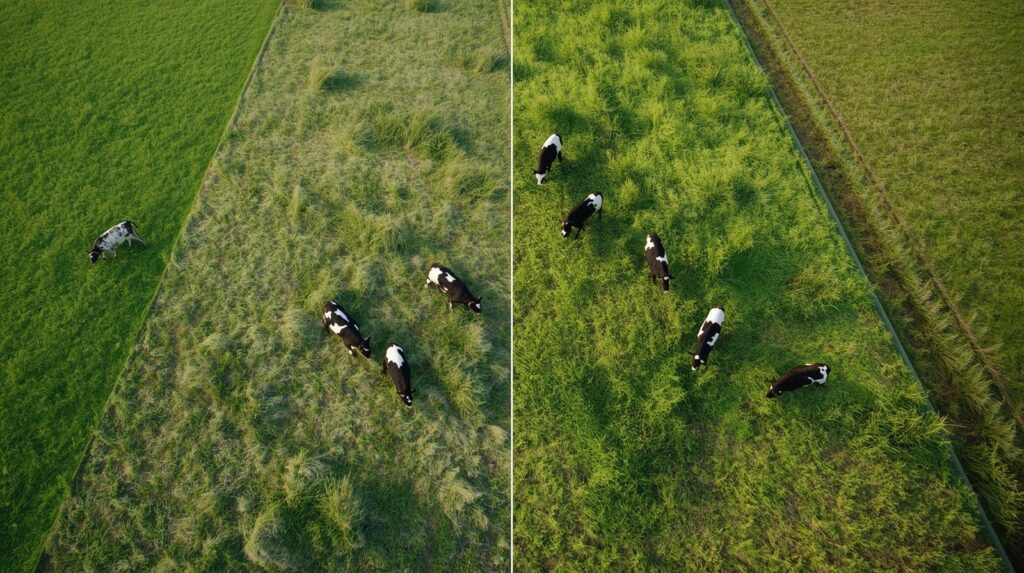
Rest periods must be carefully managed to allow full regrowth before re-grazing. Overstocking should be avoided, as it leads to pasture degradation.
Fertilization plays an important role in maintaining grass productivity, especially for high-demand species like Kikuyu and Bermuda grass.
Water management is also critical in dry regions. Irrigation may be necessary to maintain consistent growth cycles.
Finally, monitoring pasture condition regularly ensures early detection of overgrazing or nutrient deficiency.
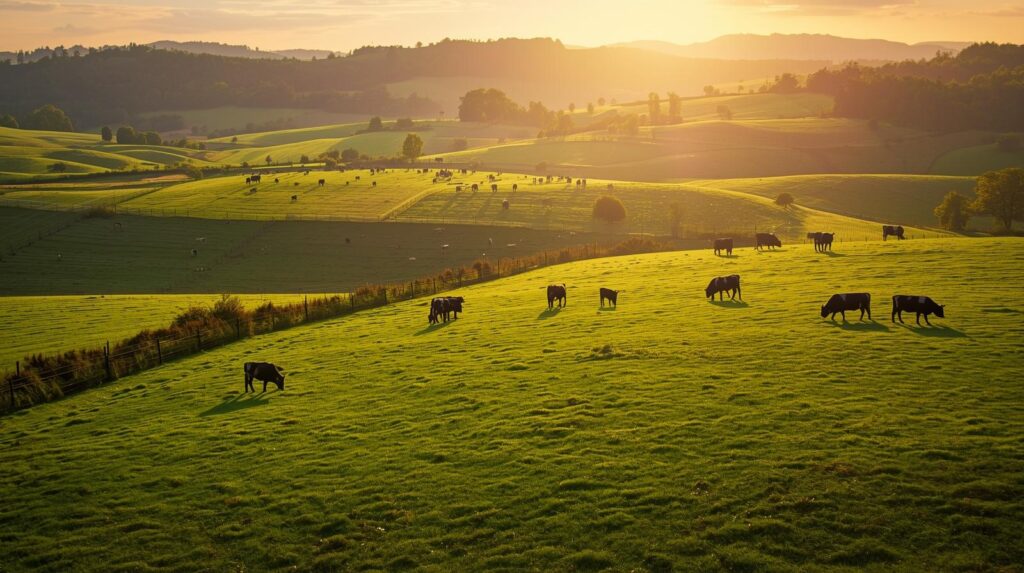
A 4 rotational grazing system is one of the most efficient and sustainable livestock management methods, but its success depends heavily on selecting the right pasture grasses.
Kikuyu grass, Bermuda grass, Rhodes grass, Buffel grass, and Lucerne each offer unique advantages that can be combined to create a highly productive grazing system.
There is no single “best” grass for all conditions. Instead, the most effective approach is to use a combination of grasses that complement each other in growth rate, drought resistance, and nutritional value.
When properly managed, a 4 paddock rotational grazing system can significantly increase carrying capacity, improve soil health, and ensure consistent livestock feed availability throughout the year. For more info, check out FAO.
Read more from us on our site.