
Watermelon farming in Namibia works best when you align your planting with heat, water availability, and soil conditions. The crop grows fast, but it is unforgiving if you get the basics wrong. Every stage—from land selection to harvest—needs to be handled deliberately if you want large, sweet, market-ready fruits. FAO
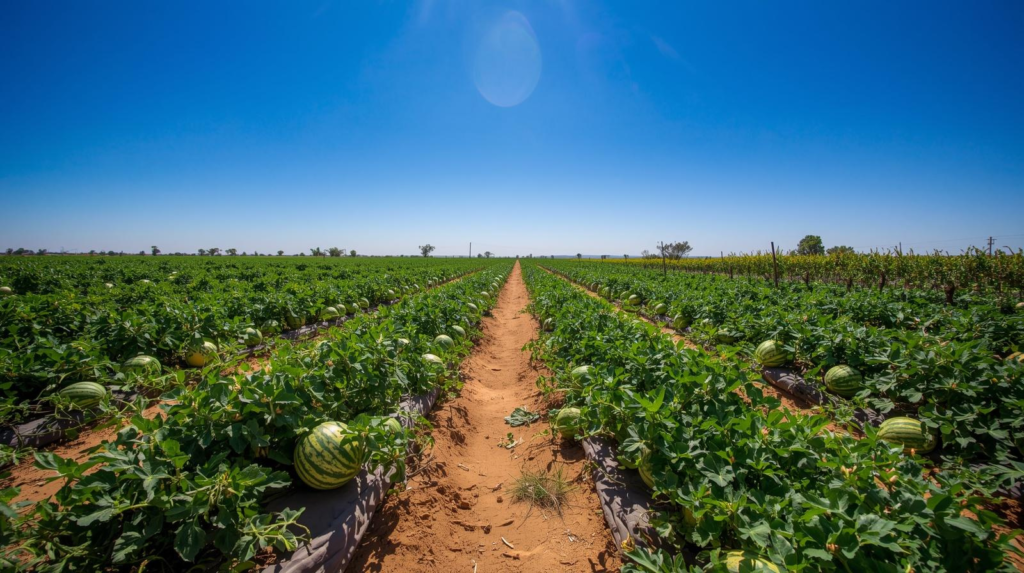
Understanding Growth Stages of Watermelons
To grow watermelons successfully, you need to understand how the plant develops. Each stage requires slightly different care.
- Germination stage (0–10 days): Seeds sprout and establish roots
- Vegetative stage (10–30 days): Vines grow rapidly and spread
- Flowering stage (30–45 days): Male and female flowers appear
- Fruiting stage (45–80 days): Fruits develop and expand
- Maturity stage (80–100 days): Fruits ripen and become ready for harvest
If you mismanage water or nutrients during flowering and fruiting, yield drops significantly.
Land Selection and Preparation
Watermelons require space and good soil structure. The crop performs best on land that is open, flat, and exposed to sunlight throughout the day.
Start by clearing the land completely. Remove weeds, roots, and stones that may interfere with vine spread. After clearing, loosen the soil deeply using a hoe or plough. A depth of about 30 cm allows roots to penetrate easily.
In Namibia, sandy soils are common and actually beneficial for watermelons because they drain well. However, sandy soils lack nutrients, so you must enrich them using compost or manure before planting.
Form planting basins or mounds instead of flat planting. This improves drainage and keeps roots healthy.
[IMAGE PLACEHOLDER: Farmer preparing land and forming planting mounds]
Seed Selection and Handling
Seed quality determines your final harvest. Weak or poor-quality seeds result in uneven germination and weak plants.
Choose seeds that are:
- Certified and disease-free
- Known for high yield
- Adapted to warm climates
Before planting, you can soak seeds in clean water for a few hours to speed up germination. Avoid soaking too long, as this can damage the seed.
Always plant more than one seed per hole and later remove weaker seedlings. This ensures at least one strong plant per station.
Planting Techniques That Improve Yield
Planting should only begin when the soil is warm. Cold soil delays germination and weakens early growth.
- Plant seeds 2–3 cm deep
- Place 2–3 seeds per hole
- Space plants widely to allow vine spread
After germination, thin out weaker plants and leave the strongest one. This reduces competition and allows better nutrient use.
Good spacing also improves airflow, which reduces disease risk and allows sunlight to reach all parts of the plant.
Water Strategy for Namibian Conditions
Water management is where most farmers either win or lose.
During early growth, the plant needs consistent moisture to establish strong roots. As vines begin spreading, water demand increases slightly. The most critical stage is fruit development—lack of water here leads to small or poorly formed fruits.
However, too much water is just as dangerous. Overwatering dilutes sweetness and can cause fruit cracking or root diseases.
As harvest approaches, reduce watering. This helps concentrate sugars in the fruit, giving you sweeter watermelons.
If possible, use drip irrigation. It saves water and delivers moisture directly to the roots without wetting the leaves.
Nutrient Management and Feeding
Watermelons are not heavy feeders compared to some crops, but they still need balanced nutrition.
At the beginning, nitrogen supports vine growth. As the plant transitions to fruiting, potassium becomes more important because it influences fruit size, sweetness, and quality.
A simple feeding approach:
- Apply compost before planting
- Use balanced fertilizer during early growth
- Increase potassium during fruit development
Avoid excessive nitrogen late in the cycle. It will produce large vines but very few fruits.
Managing Vine Growth and Plant Health
Watermelon vines grow aggressively and can quickly take over space. Managing them properly improves both yield and fruit quality.
Allow vines to spread naturally, but avoid overcrowding. If vines become too dense, airflow reduces and disease risk increases.
Do not frequently disturb the vines. Moving them too often can stress the plant and reduce fruit development.
Removing weak or excess fruits early helps the plant focus energy on producing fewer but larger and better-quality watermelons.
[IMAGE PLACEHOLDER: Watermelon vines spreading evenly across the ground]
Pollination and Fruit Set
Watermelons produce separate male and female flowers. For fruit to form, pollen must be transferred between them.
Bees are the main pollinators. Without them, fruit set drops significantly.
To improve pollination:
- Avoid spraying chemicals during flowering
- Encourage natural pollinators
- If necessary, hand pollinate by transferring pollen manually
Poor pollination leads to small, misshapen, or aborted fruits.
Pest and Disease Awareness
Watermelon farming in Namibia is generally manageable, but pests and diseases can still reduce yields if ignored.
Common pests:
- Aphids that suck plant sap
- Beetles that damage leaves
- Fruit flies that affect developing fruits
Common problems:
- Leaf diseases caused by humidity
- Root problems caused by poor drainage
The best control strategy is prevention:
- Use clean seeds
- Maintain proper spacing
- Avoid overwatering
- Remove infected plants early
Healthy plants resist problems better than stressed ones.
Recognizing the Right Time to Harvest
Harvest timing directly affects quality. Picking too early results in bland fruit, while late harvesting reduces shelf life.
Look for these signs:
- The underside of the fruit turns yellow
- The tendril near the fruit dries out
- The fruit produces a dull, hollow sound when tapped
Cut the fruit using a sharp tool instead of pulling it off. This prevents damage to both the fruit and the plant.
[IMAGE PLACEHOLDER: Mature watermelon with yellow ground spot ready for harvest]
Handling After Harvest
After harvesting, careful handling maintains quality and market value.
Keep fruits in a shaded area immediately after picking. Direct sunlight after harvest reduces quality and shelf life.
Avoid stacking fruits too high, as pressure causes bruising. Transport them carefully if you plan to sell in markets.
Watermelons can be sold fresh or processed into juice, making them a flexible crop for income generation.
Practical Yield Improvement Tips
If you want better results, focus on these practical improvements:
- Plant at the right time when soil is warm
- Use quality seeds instead of random ones
- Maintain proper spacing
- Control water carefully, especially during fruiting
- Feed the plant according to growth stage
- Harvest at the correct time
These are simple but powerful adjustments that separate average farmers from successful ones.
Mistakes That Will Cost You Yield
A lot of people struggle with watermelon farming not because it is difficult, but because they ignore basics.
Avoid these:
- Planting in cold soil
- Overwatering or poor drainage
- Using weak or unknown seeds
- Overcrowding plants
- Ignoring pollination
- Harvesting too early
Fixing just these mistakes can significantly increase both yield and fruit quality.
Market Opportunities in Namibia
Watermelons have strong demand across Namibia, especially during hot seasons. They sell quickly in local markets, roadside stalls, and urban areas.
Because they grow relatively fast, farmers can produce multiple cycles in one season if conditions allow.
You can also explore:
- Supplying local vendors
- Selling directly to consumers
- Processing into juice or fruit packs
The key is consistency in quality. Sweet, well-sized watermelons always sell better.
Scaling from Small to Commercial Production
Starting small is the smartest move. Begin with a manageable plot and focus on getting everything right—soil, water, spacing, and timing.
Once you understand the crop:
- Expand gradually
- Improve irrigation systems
- Invest in better seeds
- Build reliable market connections
Watermelon farming can move from a small side activity to a serious income stream if managed properly.
Final Practical Insight
Watermelons are simple to grow, but they reward precision. The difference between a poor harvest and a great one usually comes down to consistency. If you control water, spacing, and timing, you’ll consistently produce large, sweet fruits that are easy to sell.
read more about agriculture on farmnamibia