
Tilapia farming in Namibia is emerging as one of the most promising agricultural opportunities for small-scale farmers, entrepreneurs, and commercial investors. With growing demand for affordable protein, limited local freshwater fish production, and suitable climatic conditions, tilapia farming offers a realistic pathway to income generation, food security, and job creation.
This guide provides a complete, practical, and Namibia-specific overview of tilapia farming, from beginner level to commercial production. It is designed to serve as a central reference point, linking to more detailed articles on each topic.
Table of Contents
What Is Tilapia Farming?
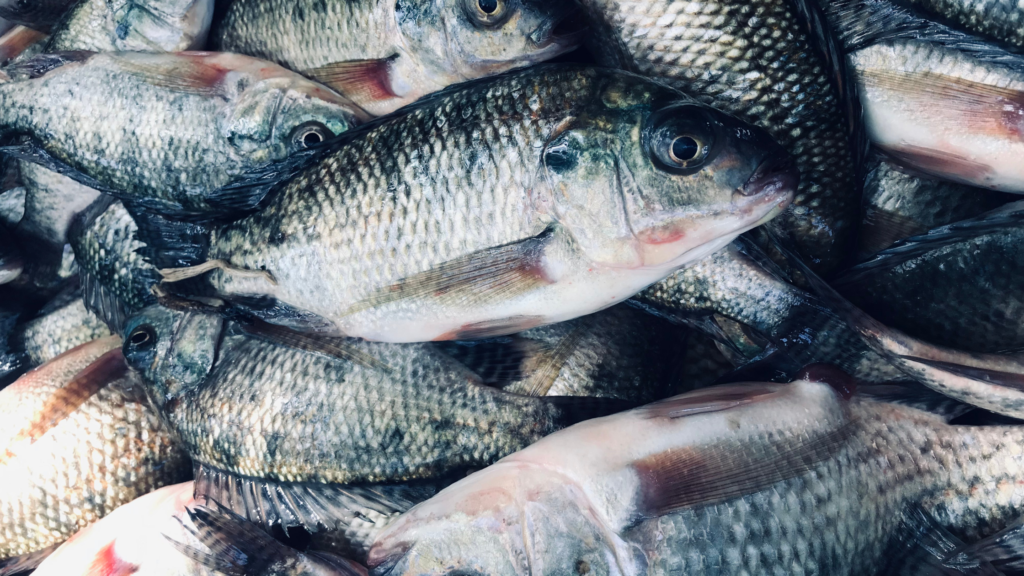
Tilapia farming is the practice of raising tilapia fish in controlled freshwater environments such as ponds, tanks, or cages for food and sale. Tilapia is one of the most widely farmed fish species in the world due to its:
- Fast growth rate
- High tolerance to varying conditions
- Efficient feed conversion
- Strong market demand
For Namibia, tilapia farming represents a shift from reliance on imported freshwater fish toward local production.
Why Tilapia Farming in Namibia Makes Sense
Tilapia farming in Namibia makes sense for several structural reasons:
- Namibia imports a large portion of its freshwater fish
- Demand for fish protein is rising in urban and peri-urban areas
- Tilapia grows well in warm climates
- Farming can be done on small land areas
- Entry costs are lower than many livestock systems
The Current State of Tilapia Farming in Namibia
As of 2026, freshwater aquaculture in Namibia remains largely underdeveloped. Most tilapia consumed locally is either caught informally from rivers and streams, produced on a very small scale by local farmers, or imported from neighboring countries such as South Africa, Botswana, Zambia, and Zimbabwe. Despite this, the local tilapia market is far from saturated and remains significantly underserved.
Wild tilapia harvesting is strictly regulated by seasonal restrictions, catch limits, and minimum size requirements, which greatly limits supply. This creates a clear opportunity for fish farmers, as controlled tilapia farming can consistently meet market demand.
Tilapia is highly sought after in Namibia because it is rich in protein, affordable, and considered a local delicacy, making it an ideal product for commercial aquaculture. For farmers, tilapia farming in Namibia presents an opportunity rather than competition.
Climate and Environmental Suitability
Tilapia thrives in water temperatures between 25°C and 32°C.
Many regions in Namibia naturally fall within or near this range for most of the year, especially:
- Northern Namibia
- Central regions during warmer months
- Areas with stable groundwater temperatures
With good pond design and management, tilapia farming can be done successfully even in semi-arid regions.
Types of Tilapia Suitable for Namibia
The most suitable species for tilapia farming in Namibia is:
Nile Tilapia (Oreochromis niloticus)
Why Nile tilapia?
- Fast growth
- Strong market acceptance
- High survival rates
- Adaptable to pond systems
Most commercial tilapia farming worldwide is based on Nile tilapia.
Tilapia Farming Systems Used in Namibia
Earthen Ponds
- Low construction cost
- Natural productivity
- Suitable for rural areas
Brick or Concrete Ponds
- Durable
- Easier water control
- Ideal for semi-intensive systems
Tank Systems
- High control
- Higher cost
- Suitable for urban or peri-urban farms
For beginners, pond-based systems are usually the most practical.
Pond Design and Construction
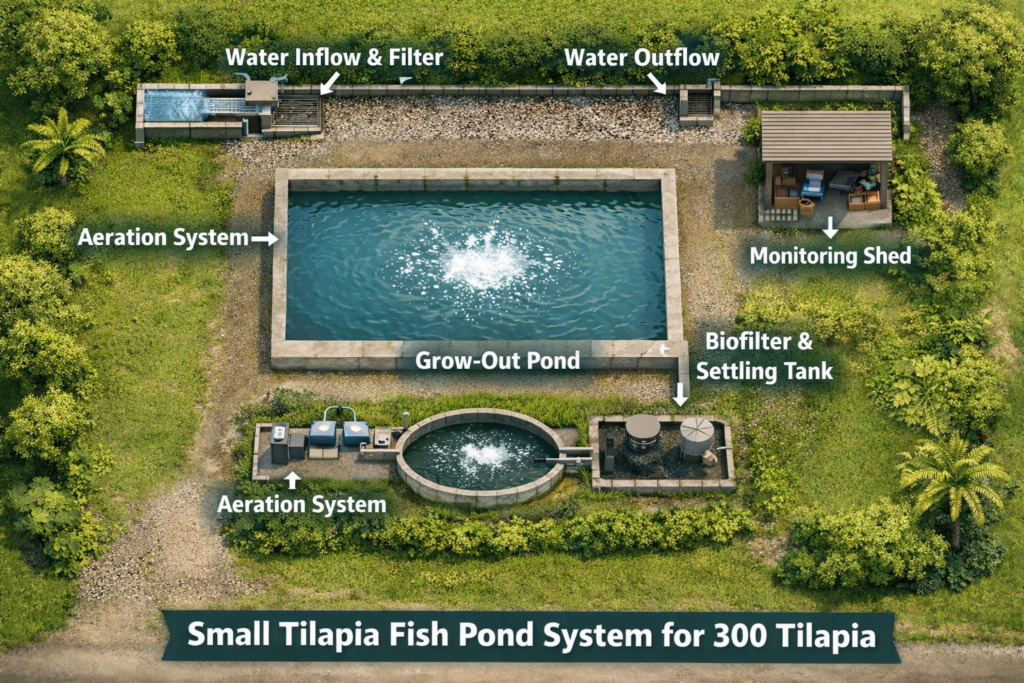
Proper pond design is critical to success in tilapia farming in Namibia.
Key design factors:
- Depth: 1.2–1.5 meters
- Rectangular shape for easy harvesting
- Gentle slope toward drainage point
- Secure inlet and outlet pipes
Pond size depends on the number of fish you plan to raise.
(See detailed guides on 300, 500, 1,000, and 3,000 tilapia systems.)
Water Requirements and Management
Water is often cited as a concern in Namibia, but tilapia farming uses managed water, not continuous flow.
Good water management includes:
- Lined ponds to reduce seepage
- Limited water exchange
- Monitoring water color and smell
- Avoiding overfeeding
Water can often be reused for multiple production cycles.
Stocking Density and Fingerlings
Stocking density determines growth, feed efficiency, and survival.
A common semi-intensive density in Namibia:
- 3–5 fish per square meter
Always stock more fingerlings than your target harvest to allow for mortality.
Fingerlings should be:
- Healthy
- Uniform in size
- Sourced from reputable suppliers
Feeding and Nutrition
Feed is the largest ongoing cost in tilapia farming.
Typical feed characteristics:
- Protein: 28–32%
- Floating pellets preferred
- Feed 2–3 times daily
Efficient feeding is critical:
- Overfeeding wastes money
- Underfeeding slows growth
Feed management often separates profitable farms from failing ones.
Growth Cycle and Harvesting
Under good conditions:
- Tilapia reaches market size in 5–7 months
- Harvest size: 350–500 grams
Harvesting can be:
- Partial (staggered)
- Full pond harvest
Staggered harvesting improves cash flow and pond efficiency.
Disease Management and Biosecurity
Tilapia is hardy, but disease can occur if management is poor.
Key prevention strategies:
- Do not overcrowd
- Maintain good water quality
- Quarantine new fingerlings
- Remove dead fish immediately
Prevention is far cheaper than treatment.
Costs of Tilapia Farming in Namibia
Main cost categories:
- Pond construction (once-off)
- Fingerlings
- Feed
- Labour (if commercial)
- Water and electricity (if used)
Small systems can start with modest capital, while larger systems require planning and cash flow management.
Profitability and Business Potential
Profitability depends on:
- Feed efficiency
- Survival rate
- Market price
- Scale of operation
Tilapia farming becomes more profitable as farmers:
- Gain experience
- Improve management
- Scale production
Commercial systems can generate consistent income when markets are secured.
15. Market Opportunities in Namibia
Tilapia can be sold through:
- Local markets
- Direct farm sales
- Restaurants and lodges
- Informal traders
Fresh, locally produced tilapia often sells quickly due to limited supply.
Read more on the economics of tilapia farming in Namibia
Scaling From Small to Commercial Production
Most successful farmers follow a step-by-step growth path:
- Start with 300–500 fish
- Learn feeding and water management
- Scale to 1,000 fish
- Move into commercial production (3,000+ fish)
This reduces risk and builds experience.
Tilapia Farming vs Other Farming Options
Compared to goat or sheep farming:
- Tilapia has faster turnover
- Requires less land
- Has lower theft risk
- Requires more daily management
Each system has advantages, but tilapia is attractive for farmers with limited land.
Common Challenges and How to Overcome Them
Despite its strong potential, tilapia farming in Namibia faces several practical challenges that new and emerging farmers must understand.
Common challenges:
- Tilapia feed cost and availability. Tilapia feed is not widely produced locally in Namibia and it is mainly available in Windhoek, the capital city. As tilapia farmers move farther away from Windhoek, access to quality fish feed becomes increasingly difficult. Limited availability often results in higher prices due to transport costs, making feed one of the most expensive inputs in tilapia farming. Since feed already accounts for the largest portion of operating costs, this challenge can significantly affect profitability if not properly managed.
- Availability of tilapia fingerlings. Namibia has relatively few hatcheries and nurseries that produce fingerlings at scale, which makes sourcing quality fingerlings difficult, especially for new farmers. While fingerlings can usually be found somewhere within each region or nearby areas, they are often expensive and, in some cases, of inconsistent quality. At the early stages, farmers may have to work with what is available while gaining experience. Over time, as farmers grow their operations and build relationships, it becomes easier to identify reliable suppliers, negotiate better prices, and consistently access healthier fingerlings.
- The most challenging obstacle is the technical knowledge gap in tilapia farming within the Namibian context. There is limited locally produced information, training material, textbooks, or online content that focuses specifically on tilapia farming in Namibia. This lack of Namibia-specific data can make it difficult for farmers to learn best practices suited to local conditions. However, tilapia farming principles remain largely the same regardless of location. Farmers can therefore draw valuable knowledge from neighboring countries such as South Africa, Zimbabwe, Angola, and Zambia, where climatic and environmental conditions are similar. While the systems may not be identical, many of the challenges and solutions are transferable and can be successfully adapted to Namibian conditions.
Solutions:
- Cooperative feed buying
- Development of local hatcheries
- Farmer training and information sharing
Most challenges are solvable with planning.
Government, Policy, and Support Environment
Aquaculture is increasingly recognized as a strategic sector:
- Food security
- Job creation
- Import substitution
Support programs, training, and partnerships are expected to grow in importance.
The Future of Tilapia Farming in Namibia
The future of tilapia farming in Namibia is strong because:
- Demand is rising
- Local production is limited
- Climate is suitable
- Youth are seeking agricultural opportunities
Early adopters are well positioned to benefit.
Final Thoughts and Next Steps
Tilapia farming in Namibia is no longer an experiment — it is a real agricultural opportunity.
Success depends on:
- Starting at the right scale
- Learning proper management
- Scaling gradually
- Securing markets
This guide serves as a foundation.
From here, you can explore detailed guides on pond sizes, costs, feeding, profitability, and scaling strategies.
Recommended Next Reads (Internal Links)
- How to Grow 300 Tilapia in Namibia
- How to Raise 1,000 Tilapia in Namibia
- Tilapia Farming vs Goat Farming in Namibia
- The Tilapia Fish Market in Namibia