
Table of Contents
Bananas are one of the most rewarding crops to grow, whether on a small farm or in a backyard garden. They grow quickly, produce high yields, and can become a reliable source of food or income when managed properly. While many people assume bananas require tropical rainforest conditions, they can be successfully grown in a variety of climates, including warm regions with moderate rainfall, as long as the right techniques are applied. and you can read more on FAO
Understanding Banana Plants
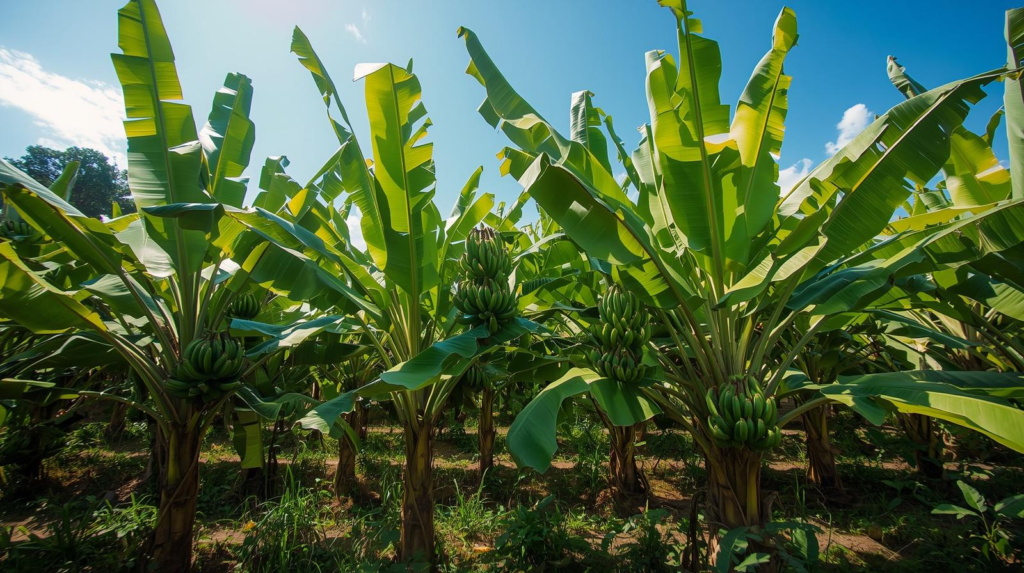
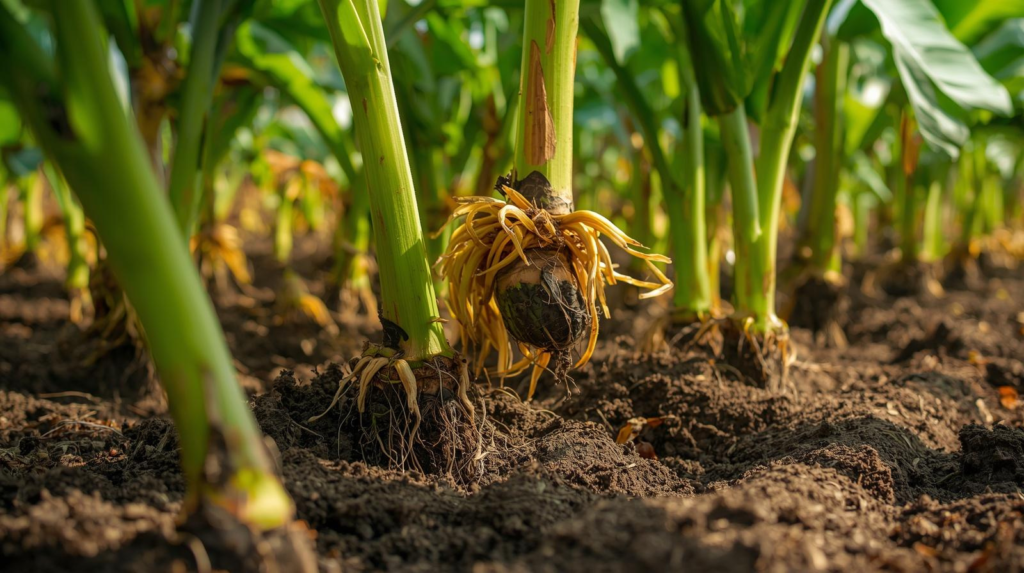
Bananas are not trees but large herbaceous plants. What appears to be a trunk is actually a pseudostem made up of tightly packed leaf bases. The true stem grows underground and produces shoots known as suckers, which develop into new plants.
Each banana plant produces fruit only once. After harvesting, the main plant dies back and is replaced by new suckers. Managing these suckers properly is key to maintaining continuous production.
Climate Requirements for Banana Growth
Bananas thrive in warm, humid environments. Temperature plays a major role in determining growth speed and fruit quality.
- Optimal temperature: 25°C to 35°C
- Minimum temperature: above 15°C
- Frost: highly damaging and should be avoided
Bananas also require consistent moisture. While they need plenty of water, they do not tolerate waterlogged conditions. In regions with low rainfall, irrigation becomes essential to maintain steady
Soil Preparation and Requirements
Bananas require fertile, well-drained soil rich in organic matter. Poor soil conditions lead to weak plants and low yields.
Ideal soil characteristics:
- Loamy or sandy-loam soil
- Good drainage
- High organic content
- pH between 5.5 and 7.0
Before planting, the land should be cleared and deeply ploughed to loosen the soil. Adding compost or well-rotted manure improves both fertility and moisture retention. Bananas are heavy feeders, so investing in soil preparation pays off in the long run.
Selecting Planting Material
Bananas are propagated using suckers or tissue-cultured plantlets.
Suckers
These are shoots that grow from the base of mature plants. The best type is the “sword sucker,” which has a strong base and narrow leaves.
Tissue-Cultured Plants
These are produced in laboratories and are disease-free, uniform, and high yielding. They are often preferred for commercial farming.
Avoid weak or diseased planting material, as it will affect the entire crop cycle.
Planting Bananas
Planting should be done at the beginning of the rainy season or when irrigation is available.
Steps:
- Dig holes about 60 cm wide and 60 cm deep
- Mix topsoil with compost or manure
- Place the sucker or plantlet in the hole
- Cover with soil and firm gently
- Water immediately after planting
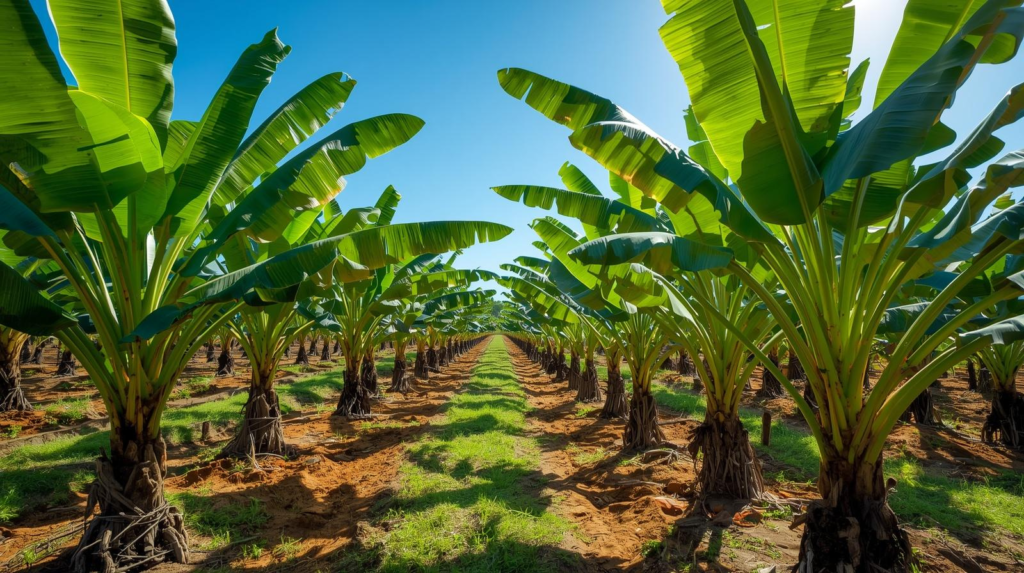
Spacing depends on the variety but generally ranges from 2 to 3 meters between plants. Proper spacing ensures good airflow and reduces disease risk.
Watering and Irrigation
Bananas require a consistent supply of water throughout their growth cycle.
- Water regularly, especially during dry periods
- Maintain moist soil, but avoid waterlogging
- Use drip irrigation for efficiency
Water stress can reduce fruit size and delay growth, so consistency is key. However, standing water can cause root rot, so drainage must always be maintained.
Fertilization and Nutrient Management
Bananas are heavy feeders and require regular fertilization to produce high yields.
Key nutrients:
- Nitrogen for leaf growth
- Potassium for fruit development
- Phosphorus for root growth
Apply organic manure regularly and supplement with balanced fertilizers. Feeding should be done throughout the growing cycle, especially during the active growth and fruiting stages.
Managing Suckers and Plant Growth
Banana plants produce multiple suckers, but not all should be allowed to grow.
- Keep one main plant and one or two healthy suckers
- Remove excess suckers to reduce competition
- Select strong suckers for the next crop cycle
Proper sucker management ensures continuous production and prevents overcrowding.
Weed Control and Mulching
Weeds compete with banana plants for nutrients and water.
- Remove weeds regularly
- Use mulch to suppress weed growth
- Mulching also helps retain soil moisture
Organic mulch such as dry leaves or grass is highly effective and improves soil health over time.
Pest and Disease Management
Bananas are susceptible to several pests and diseases that can affect yield.
Common pests:
- Banana weevils
- Nematodes
Common diseases:
- Panama disease
- Leaf spot (Sigatoka)
Control measures:
- Use disease-free planting material
- Maintain field hygiene
- Remove infected plants
- Apply appropriate treatments when necessary
Prevention is always more effective than treatment, so regular monitoring is essential.
Flowering and Fruit Development
Banana plants typically flower 6 to 9 months after planting, depending on conditions.
- A flower spike emerges from the top
- Hands of bananas develop below the flower
- Each plant produces one bunch
During this stage, proper nutrition and watering are critical to ensure large, healthy fruit.
Harvesting Bananas
Bananas are usually ready for harvest 9 to 12 months after planting.
Signs of maturity:
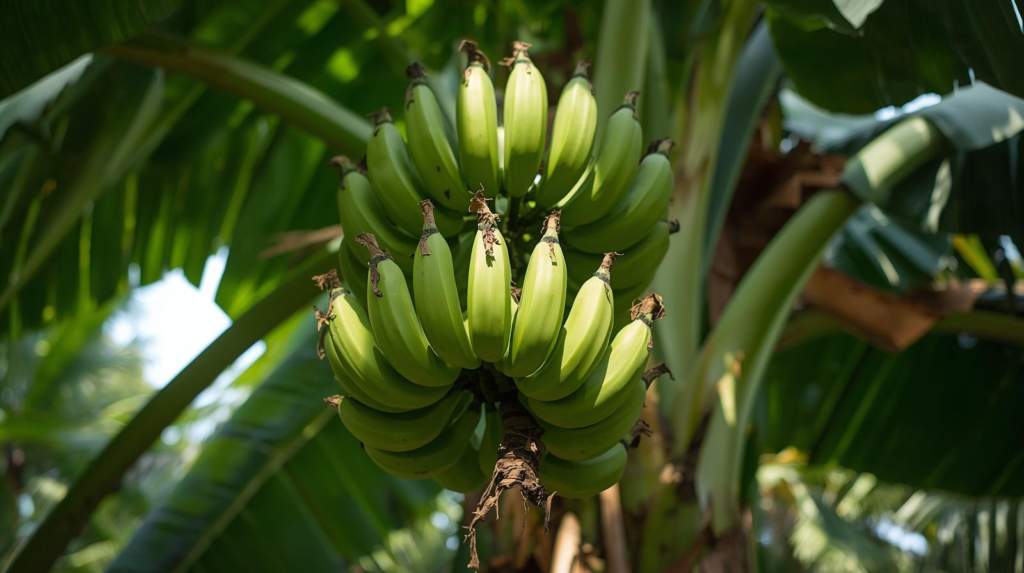
- Fruits are full-sized but still green
- Angles on the fruit become rounded
To harvest:
- Cut the bunch carefully to avoid damage
- Support the bunch to prevent bruising
Harvesting at the right stage ensures better ripening and quality.
Post-Harvest Handling and Storage
After harvesting, bananas should be handled carefully to prevent bruising.
- Store in a cool, shaded place
- Allow to ripen naturally
- Avoid stacking too heavily
Proper handling improves shelf life and market value.
Common Mistakes to Avoid
Many growers fail to achieve good yields due to avoidable mistakes.
- Poor soil preparation
- Using weak planting material
- Overcrowding plants
- Inconsistent watering
- Ignoring pests and diseases
Fixing these basics can significantly improve production and profitability.
Profit Potential of Banana Farming
Bananas are a high-demand crop with strong market potential.
- Can be sold fresh or processed
- Suitable for small-scale and commercial farming
- Provides continuous income with proper management
With the right approach, banana farming can become a sustainable and profitable agricultural venture.
you can read more about agriculture on our site